 |
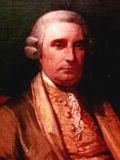
Henry Middleton
b. 1717, the Oaks (?), near Charleston, South Carolina
d. 13 Jun 1784, Charleston, South Carolina |
| Title: |
President of Congress |
| Term: |
22 Oct 1774 - 26 Oct 1774 |
| Chronology: |
22 Oct 1774,
elected to the office of the President of Congress, session of Congress, Carpenter's Hall, Philadelphia, Pennsylvania [1] |
|
26 Oct 1774, ceased to exercise the functions of office upon the dissolution of the Congress [2] |
| Biography: |
| Educated at home and, probably, in England; received from his father the lands in England, Barbados, and Carolina, becoming large landowner and planter; served as justice of the peace and quorum (1742-1780) for his county; elected to the Commons House of Assembly of South Carolina (1742-1755); Speaker of the Commons House (1745-1747, 1754, 1755); was appointed to His Majest's Council for South Carolina (1755-1770); resigned his seat in the Council (Sep 1770) to become a leader of the opposition to British policy; served as a delegate from South Carolina to the Continental Congress (1774-1775); succeeded Peyton Randolph as the President of Congress (22 Oct 1774 - 26 Oct 1774), holding this office a few days before this body dissolved itself; participated in organisation of a new government of South Carolina; was elected a member of the first and second Provincial Convention of South Carolina (1775-1776), representing the district between Broad and Catawba Rivers and then Charleston; elected (16 Nov 1775) a member of the Council of Safety of South Carolina (takes his seat 4 Dec 1775, serving to 26 Mar 1776); member of the Legislative Council (1776-1778) and Senate (1778-1780) of the State of South Carolina; on the fall of Charleston (1780) during the British invasion, he retired to his estates. |
| Biographical sources: "Middleton of South Carolina," in The South Carolina Historical and Genealogical Magazine, vol. I, No. 3, July 1900, pp. 239-242; Biographical Directory of the United States Congress (2005); South-Carolina Gazette and General Advertiser, From Tuesday, June 15, to Thursday, June 17, 1784, vol. II, Numb. 164, p. 4, col. 3 (obituary) |
| |
| [1] |
Journals of the Continental Congress, 1:102. |
| [2] |
Journals of the Continental Congress, 1:114. |
|
Image: portrait by Bejamin West. |
