 |
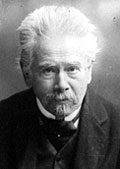
Joaquim Teófilo Fernandes Braga
b. 24 Feb 1843, Ponta Delgada, São Miguel Island, Azores
d. 28 Jan 1924, Lisbon |
| Title: |
Presidente do Governo Provisório da República Portuguesa (President of the Provisional Government of the Portuguese Republic) |
| Term: |
5 Oct 1910 - 3 Sep 1911 |
| Chronology: |
5 Oct 1910, assumed membership and presidency in the Provisional Government constituted at the seat of Municipal Council of Lisbon, Paços do Municipio (Town Hall), Lisbon [1] |
| |
24 Aug 1911, ceased to exercise the functions of Head of State with the swearing-in of Presidente da República [2] |
| |
3 Sep 1911, discharged, decree of the President of the Republic [3] |
| Title: |
Presidente da República (President of the Republic) |
| Term: |
29 May 1915 - 5 Oct 1915 |
| Chronology: |
29 May 1915,
elected, session of the Congresso da República (Congress of the Republic), Palácio do Congresso (São Bento), Lisbon [4] |
| |
29 May 1915,
made an affirmation required by law at the ceremony of installation as President of the Republic, session of the Congress, Palácio do Congresso (São Bento), Lisbon [4] |
| |
5 Oct 1915,
expiration of term |
| Biography: |
| The son of a military officer, who was presumably a descendant of King João V; attended public lyceum at Ponta Delgada (1854-1859); educated at the University of Coimbra (1862-1867), graduating with a degree in law; awarded a doctor of law (1868); taught at Porto and Coimbra; became a professor of modern literature at Lisbon (1872); published several books on Portuguese folklore and collections of early songs and ballads; was influenced by the ideas of positivism; became a co-founder of O Positivismo magazine (1878); elected to the Cortes (1888); a supporter of republicanism, he joined (1890) the Portuguese Republican Party (Partido Republicano Português, PRP) and was one of the authors of its program; as a member of the PRP Political Board, he was nominated President of the Provisional Government (5 Oct 1910 - 3 Sep 1911) after the proclamation of the republic; the Braga government introduced a number of important laws including a law on separation of church and state (20 Apr 1911), presided over the election (28 May 1911) of a constituent assembly, which opened on 19 Jun 1911; elected (29 May 1915) the President of the Republic to complete the term of Manuel de Arriaga after the fall of dictatorship of General Pimenta de Castro; presided over extending electoral franchise and holding the elections (13 Jun 1915) to the Câmara dos Deputados (Chamber of Deputies); suppressed a monarchist rising in Porto (August 1915); after the expiration of his presidential duties, he devoted himself exclusively to writing. |
| Biographical sources: "Os presidentes e os governos da república no século XX", by Alberto Laplaine Guimarães... [et al.] (Lisboa: Caixa Geral de Depósitos, Imprensa Nacional - Casa da Moeda, 2000) ;
"Os Presidentes da República Portuguesa", coord. by António Costa Pinto and Maria Inácia Rezola (Lisboa: Temas & Debates, 2001) |
| Elections: |
| Candidate |
Vote (29 May 1915) |
| Joaquim Teófilo Fernandes Braga |
98 |
Duarte Leite Pereira da Silva
|
1 |
blank
|
3 |
| total votes cast |
102 |
|
| Source of electoral results: Diário das Sessões do Congresso, Sessão de 29 de Maio de 1915, p. 7. |
| |
| [1] |
Diario do Governo, No. 222, 5 Oct 1910, Supplement; Diario do Governo, No. 1, 6 Oct 1910, p. 1. |
| [2] |
Diario da Assembleia Nacional Constituinte, Sessão N.° 59 de 24 de Agosto de 1911, p. 5. |
| [3] |
Diario do Governo, No. 206, 4 Sep 1911, p. 3729. |
| [4] |
Diário das Sessões do Congresso, Sessão de 29 de Maio de 1915, p. 7. |
| |
Image: photograph by Ch. Chusseau-Flaviens |
