 |
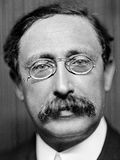
André-Léon Blum
b. 9 Apr 1872, Paris
d. 30 Mar 1950, Jouy-en-Josas |
| Title: |
Président du Gouvernement provisoire de la République française (President of the Provisional Government of the French Republic) |
| Term: |
12 Dec 1946 - 22 Jan 1947 |
| Chronology: |
12 Dec 1946, elected, session of the Assemblée nationale constituante (Constituent National Assembly), Palais-Bourbon, Paris [1] |
|
16 Jan 1947, submitted resignation to President of the Republic; continued in office until the appointment of the President of the Council of Ministers (22 Jan 1947) |
|
22 Jan 1947, office of Président du Gouvernement provisoire de la République française ceased to exist upon the appointment of Président du Conseil des ministres (President of the Council of Ministers) [2] |
| Biography: |
| Léon Blum was first elected to the Chamber of Deputies in 1919. In the elections of 1928 the Socialist Party won 104 seats in the Chamber of Deputies, but Blum himself was defeated. A year later he was returned for Narbonne, which also returned him in 1932 and again in 1936. Blum presided over the Popular Front coalition government in 1936-37. He was the first Socialist and the first Jew to become premier of France. After the liberation of France, Blum emerged as one of France's leading veteran statesmen, and in the spring of 1946 he negotiated a U.S. loan to France of US$1.4 billion for postwar reconstruction. In December 1946 he formed a month-long "caretaker government," the first all-Socialist French ministry, pending the election of the first president of the new Fourth Republic. Designated by President Vincent Auriol to the office of President of the Council of Ministers, he failed to secure the constitutional majority in the National Assembly (vote of 21 Nov 1947). Served as vice-president of the Council of Ministers in the Cabinet of André Marie (26 Jul 1948 - 5 Sep 1948). |
| Biographical sources: Dictionnaire des parlementaires français 1889-1940, 2:635-639. |
| Elections: |
| Candidate |
Vote (12 Dec 1946) |
| votes cast |
590 |
| blank |
7 |
| valid votes |
583 |
| constitutional majority |
310 |
| Léon-André Blum |
573 * |
| Jean-Baptiste-Nicolas-Robert Schuman |
10 * |
|
| * Original counting reported 12 Dec 1946 (Blum: 575, Schuman: 8) was rectified on 13 Dec 1946 following a statement made by two deputies, who claimed they voted for Schuman, not Blum. |
| Source of electoral results: JORF - Débats parlementaires, No. 118, 13 Dec 1946, p. 84. |
| |
| [1] |
JORF - Débats parlementaires, No. 118, 13 Dec 1946, p. 84. |
| [2] |
JORF - Lois et Décrets, No. 20, 23 Jan 1947, p. 939. |
