 |
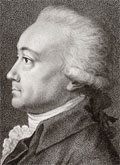
Jean-Paul Rabaut, dit Rabaut Saint-Étienne
b. 14 Nov 1743, Nîmes, Gard [1]
d. 5 Dec 1793, Paris |
| Title: |
Président de la Convention nationale (President of the National Convention) |
| Term: |
24 Jan 1793 - 7 Feb 1793 |
| Chronology: |
24 Jan 1793,
elected, session of the Convention, Salle du Manège, Paris [2] |
|
25 Jan 1793,
assumed the chair, session of the Convention, Salle du Manège, Paris [2] |
|
7 Feb 1793,
ceased to exercise the functions of office upon the election of a successor [3] |
| Names/titles: |
Also spelled: Rabaut-Saint-Étienne, Rabaut (Rabaud) de Saint-Étienne |
| Other offices: |
Président de l'Assemblée nationale (President of the National Assembly) [15 Mar 1790 - 27 Mar 1790] (see details) |
| Biography: |
| Son of a Protestant minister and elder brother of Jacques-Antoine Rabaut, dit Rabaut-Pommier, deputy of the Convention nationale (National Convention); was educated at the Lausanne seminary (1763-1765); ordained priest (11 Nov 1764); served as a Protestant minister near Toulouse and at Nîmes; moved to Paris (1785), where contributed to recognition of civil status of the Protestants (1787); gained a great reputation by publishing Lettres sur l'histoire primitive de la Grèce; was elected (27 Mar 1789) as a representative of the Third Estate of Nîmes and Beaucaire to the États-Généraux (Estates-General); served as a deputy of the Assemblée nationale (National Assembly) (1789-1791); was elected a member of the committee for drafting the Constitution; elected President of the National Assembly (15 Mar 1790 - 27 Mar 1790), causing fervent protests among the nobles and Roman Catholic clergy; demanded equal rights for the Protestants; edited Chronique de Paris and Moniteur universel, published Feuille villageoise; was elected (16 Sep 1791) administrator of the département of Gard, but remained in Paris; was elected to the National Convention (1792-1793) as a deputy for the département of Aube; voted for an appeal to the people and detention in the trial of King Louis XVI; called for delay of the king's execution; served as a member of the Commission des Douze (Commission of Twelve) to ensure security of the Girondin-dominated Convention (appointed 21 May 1793, resigned 28 May 1793); as an adherent of the Girondins, was put on the list of the deputies subject to arrest (2 Jun 1793) and went into hiding in Versailles and Paris; decreed out of law (28 Jul 1793), arrested and guillotined (5 Dec 1793). |
| Biographical sources: Dictionnaire des Conventionnels, 515-516;
Dictionnaire des parlementaires français 1789-1889, 5:72-73; "Paul Rabaut, ses lettres à Antoine Court (1739-1755): dix-sept ans de la vie d'un apôtre du désert", ed. by A.Picheral-Dardier (Paris: Grassart, 1884), 2 vols. (web site); "Rabaut Saint-Etienne, 1743-1793. Un protestant défenseur de la liberté religieuse", by André Dupont (Strasbourg: Édition Oberlin, 1946). |
| Elections: |
| Candidate |
Votes (24 Jan 1793) * |
| Jean-Paul Rabaut, dit Rabaut Saint-Étienne |
179 |
| voters/absolute majority |
355/178 |
|
| * Montagnard leaders (Jean-Marie Collot d'Herbois, Maximilien Robespierre) protested against the voting results; Collot claimed that Georges Danton obtained more than 150 votes.
|
| Source of electoral results: Archives parlementaires - Série 1, 57:639.
|
| |
| [1] |
"Paul Rabaut, ses lettres à Antoine Court", op. cit., 2:417-418: "Extraits des registres de l'état civil de Nîmes relatifs à la famille Paul Rabaut <...> Naissance de Jean-Paul Rabaut: 14 novembre 1743. Le vingt-unième novembre mille sept cent quarante trois j'ai baptisé au nom du Père, du Fils et du St-Esprit, Jean-Paul Rabaut, mon fils, que j'ai eu de mon épouse Magdelaine Gaidan. Est né le 14e du susdit mois, et a été présenté par sieur Jean Béchard et Gabrielle Rouvairol, femme de Pierre Paulhan de l'a ville de Nimes. Paul Rabaut, pasteur." |
| [2] |
Archives parlementaires - Série 1, 57:639. |
| [3] |
Archives parlementaires - Série 1, 58:371. |
|
Image: gravure by G. Fiesinger after a portrait by J. Guérin. |
