 |
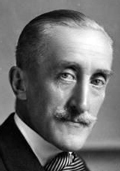
Freeman Freeman-Thomas
b. 12 Sep 1866, Ratton, England
d. 12 Aug 1941, London, England |
| Title: |
Governor General and Commander-in-Chief of the Dominion of Canada = Gouverneur général et Commandant en chef du Dominion du Canada |
| Term: |
2 Oct 1926 - 4 Apr 1931 |
| Chronology: |
5 Aug 1926,
appointed by Commission under the Royal Sign Manual and
Signet [1] |
| |
2 Oct 1926, took an oath of allegiance and an oath of office as Governor-General and Commander-in-Chief of Canada, public ceremony, Legislative Council Chamber, Parliament Buildings (Hôtel du Parlement), Québec City, Québec [2] |
| |
4 Apr 1931,
appointment superseded by the Commission of a successor effective on taking the prescribed oaths [3] |
| Names/titles: |
Original family name: Thomas (replaced Freeman in 1786); Freeman added back to the family name, thus Freeman-Thomas [from 1892]; nobility titles (conferred): Baron Willingdon of Ratton, in the County of Sussex (from 20 Jul 1910); Viscount Willingdon of Ratton, in the County of Sussex (from 23 Jun 1924); Earl of Willingdon, Viscount Ratendone of Willingdon, in the County of Sussex (from 20 Feb 1931); Marquess of Willingdon of Ratton, in the County of Sussex (from 26 May 1936) |
| |
Viceroy and Governor-General of India [18 Apr 1931 - 18 Apr 1936] |
| Biography: |
| Received education at Eton and Trinity College, Cambridge; served as aide-de-camp of the Governor of Victoria, Australia (1895-1898); was elected a Liberal member of the U.K. Parliament where he represented Hastings (1900-1906) and Bodmin (1906-1910); appointed one of the Lords Commissioners of the Treasury (Dec 1905 - Feb 1906); appointed Lord-in-Waiting to the King George V (1911); served as governor of the Indian provinces of Bombay (1913-1918) and Madras (1919-1924); was not a favourite of the British Conservative as a candidate to be Canadian Governor General, but was included on the list by insistence of George V; appointed Governor General of Canada (2 Oct 1926 - 4 Apr 1931) after Prime Minister William Lyon Mackenzie King chose him to fill the post as a fellow Liberal; was the first Governor General to act solely as the king's agent and the first to visit the U.S. in his capacity as a representative of the Head of State; initiated the Willingdon Arts Competitions for excellence in music, literature, painting and sculpture; privately worried about the "peaceful penetration" into Canada of American media and economic influences; sworn in as a member of the U.K. Privy Council (20 Mar 1931); served as Viceroy and Governor-General of India (18 Apr 1931 - 18 Apr 1936). |
| Biographical sources: The Canadian encyclopedia: year 2000 edition. McClelland & Stewart Inc., Toronto; The Times, No. 49,004, Late London Edition, London Thursday August 14 1941, pp. 1, 7 (obituary) |
| |
| [1] |
The full text of Royal Commission is not published in The Canada Gazette, but the Proclamation on assumption of the office of 2 Oct 1926 refers to "Commission under His Royal Manual Sign and Signet bearing date at the Court of St. James's the fifth day of August, 1926" [The Canada Gazette, Extra, Ottawa, Saturday, October 2, 1926, p. (1)]. |
| [2] |
The Canada Gazette, Extra, Ottawa, Saturday, October 2, 1926, pp. (1)-2; The Globe, Vol. LXXXIII, Number 23,946, Toronto, Monday, October 4, 1926, pp. (1), 3. |
| [3] |
The Canada Gazette, Extra, Ottawa, Saturday, April 4, 1931; The Globe, Vol. LXXXVIII, Number 25,356, Toronto, Monday, April 6, 1931, pp. 1-2. |
| |
Image: photograph (c. 1920) |
